
Essential
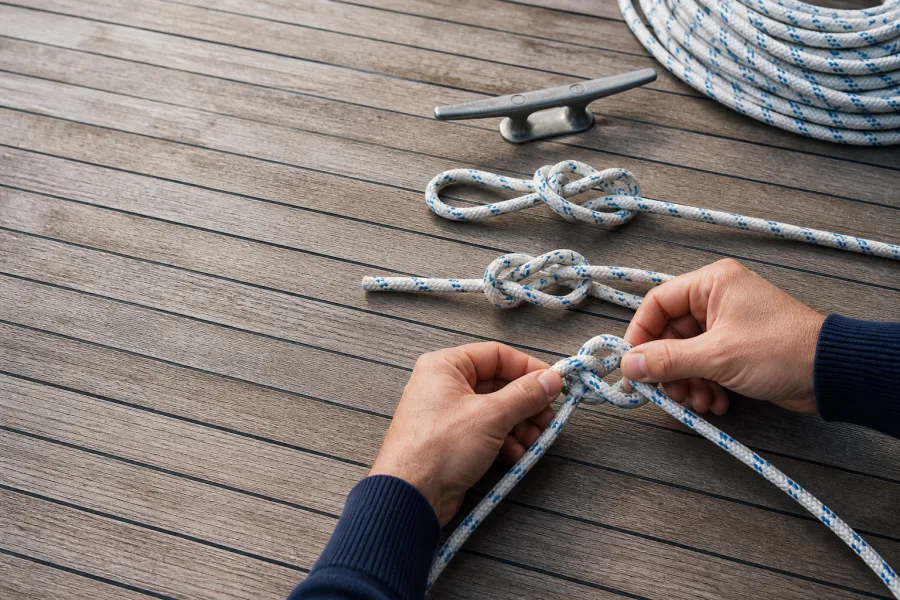
Practice rope
For visible, controlled movements
Soft braided rope is comfortable and makes crossings easy to inspect. Very thin cord behaves unlike rope on board.
- 8–10 mm diameter
- Light base colour with contrasting fleck
Exam preparation
The right rope, useful repetition and a routine that still works under exam pressure.
Retailer links: Links marked * lead to external shops. Keelwake currently receives no commission from them. Selection and order are independent of retailers.
First decide, then buy
Knots are learned through clean repeated movements, not by reading alone. A visible practice rope and a fixed attachment point matter more than a large kit. Tie each knot from both directions, then name its use and the direction of load.
Practical selection
Choose materials that let you practise the required skill under exam conditions: chart work, knots or a complete paper session.
Essential
For visible, controlled movements
Soft braided rope is comfortable and makes crossings easy to inspect. Very thin cord behaves unlike rope on board.

Practical
For cleating and round turn with two half hitches
A fixed point makes you build each knot in the correct spatial orientation. A simple cleat is enough; a decorative board is optional.

Optional
For sequence, use and self-checking
Good diagrams show every step from one consistent viewpoint. Use them as a prompt, then remove them after a few repetitions.
Links and editions checked: 2026-08-30. Retailer availability can change.
Keelwake Trainer
Real rope remains essential for knots; digital repetition in the relevant course and hand practice complement one another.
The app is free, SBF Inland and SBF Sea are included, and SKS and FKN are available as complete courses.
FAQ
A length of 1.5–2 metres is comfortable for common exam knots. A second rope in a different colour helps when practising bends.
A controlled and reliable sequence comes first. Speed follows correct repetition. Later, practise without looking and from an unfamiliar direction.